The Antigravity Breakthrough: Implications for Cloud and Space
Speculate on a hypothetical (and highly anticipated) 'antigravity breakthrough' in June 2026. Discuss the potential implications for data centers (e.g., weightless server racks, re
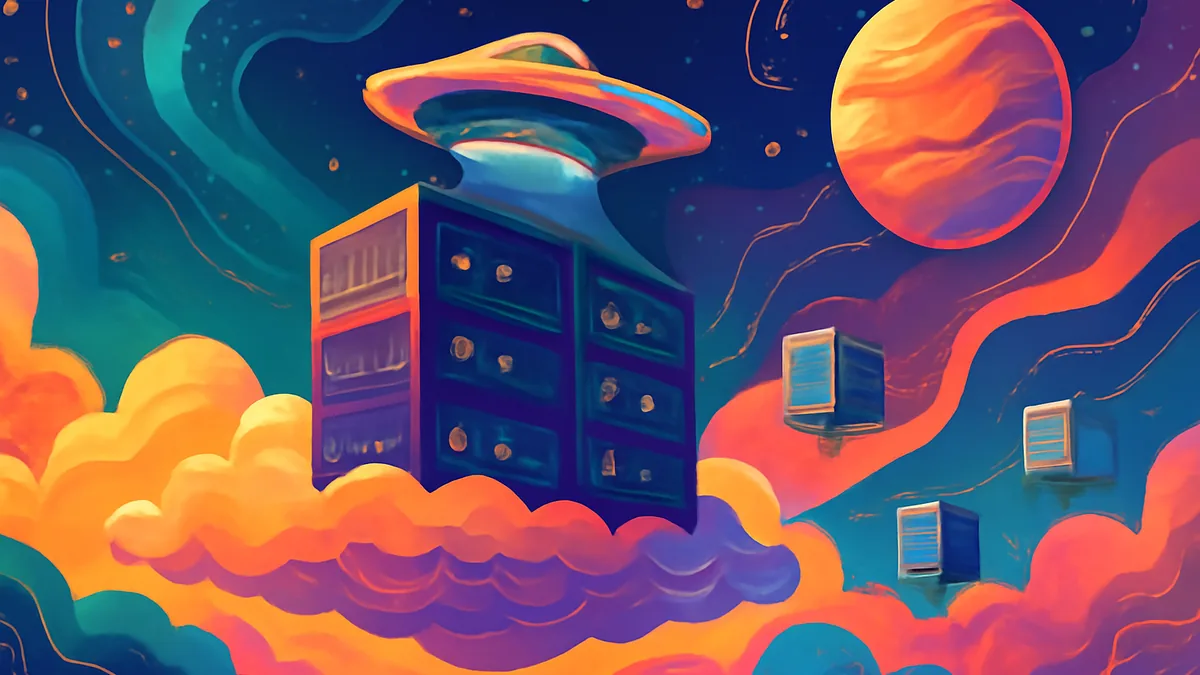
The Antigravity Breakthrough: Implications for Cloud and Space
In this thought experiment, we’ll step into the near future. The date is June 17, 2026. A consortium of physicists at CERN and DARPA has just announced a stable, controllable method for negating gravitational mass: the Seldon-Yang field. This isn’t science fiction anymore; it’s an engineering problem. For cloud architects, infrastructure engineers, and data scientists, the implications are staggering. The fundamental constraints of weight, heat, and distance that have dictated infrastructure design for decades are about to be rewritten.
This article explores the immediate and profound impact of this hypothetical breakthrough on cloud computing and data infrastructure. We’ll move beyond the headlines and into the practical, architectural shifts that would redefine our digital world.
What You’ll Get
- Data Center Reinvented: How antigravity could eliminate physical constraints like floor weight and revolutionize cooling.
- The Rise of Orbital Cloud: A look at true space-based data centers and their impact on global connectivity.
- Architectural Shifts: New latency models, APIs, and resilience strategies for a zero-g world.
- A Sobering Look at the Challenges: The new energy, security, and geopolitical hurdles to overcome.
Rethinking the Terrestrial Data Center
For decades, we’ve battled gravity in data centers. We build on massively reinforced concrete slabs to support hundreds of tons of server racks. We spend megawatts of power on complex cooling systems fighting the natural tendency of hot air to rise—a gravity-dependent phenomenon. The Seldon-Yang field changes everything.
Weightless Infrastructure
The most immediate impact is the nullification of mass. Server racks, CRAC units, and power distribution systems no longer have weight.
- Infinite Vertical Density: Racks can be stacked vertically in suspension, limited only by ceiling height and robotic accessibility, not structural load. This could increase server density by an order of magnitude in the same footprint.
- Elimination of Raised Floors: The complex, expensive sub-floor ecosystems for cooling and cabling become obsolete. Infrastructure can be suspended, allowing for direct, simplified routing of fiber and power.
- Instantaneous Deployment: A fully-loaded rack could be positioned by a small drone or a single person, drastically reducing deployment time and physical labor costs.
A Revolution in Cooling
Standard data center cooling relies on convection—hot air rises, cool air sinks. In a localized antigravity field, this behavior ceases. This isn’t a problem; it’s an opportunity.
Without gravity, air (or any coolant fluid) doesn’t naturally stratify. Heat dissipates more uniformly.
- Micro-Convection: We can create small, highly efficient convection cycles right at the chip level using micro-fields, pulling heat directly away with minimal energy.
- Reduced PUE: The Power Usage Effectiveness (PUE), a critical industry metric, would plummet. A significant portion of a data center’s energy bill is cooling. A PUE approaching the ideal 1.0 becomes feasible.
Info Block: Today, a hyper-scale data center can consume over 100 megawatts of power, with up to 40% dedicated to cooling. An antigravity-assisted system could potentially return nearly all of that cooling energy to run compute workloads. (Source: U.S. Department of Energy)
Here’s how the architectural flow might change:
graph TD
    subgraph "Traditional Data Center (Gravity-Bound)"
        A["Servers in Racks"] --> B{"Reinforced Concrete Slab<br/>(Max Load Bearing)"};
        A --> C{"Hot Aisle / Cold Aisle<br/>(Convection Cooling)"};
        C --> D["CRAC Units & Chillers<br/>(High Energy Use)"];
    end

    subgraph "Antigravity-Enabled Data Center (Post-2026)"
        X["Suspended Server Pods"] --> Y["Simple Frame Superstructure<br/>(Minimal Load)"];
        X --> Z["Field-Assisted Thermal Diffusion<br/>(Targeted Cooling)"];
        Z --> W["Low-Energy Heat Exchangers<br/>(PUE ≈ 1.05)"];
    end
The Cloud Ascends: True Space-Based Infrastructure
If you can negate the primary cost of space launch—mass—then Low Earth Orbit (LEO) becomes the ultimate data center location. Sending petabytes of storage into orbit suddenly costs no more than the price of the volume it occupies in a fairing.
LEO Data Constellations
Forget terrestrial data centers. The future is a globally distributed mesh network of orbital data pods.
- The Ultimate Edge: Data processing occurs directly in orbit, serving vast geographic areas below. Latency for inter-continental communication is reduced to the speed of light over the shortest possible distance—a straight line through the vacuum of space.
- Zero-G Advantages: In a zero-gravity, vacuum environment, hardware design is simplified. There’s no need for heavy structural supports or fans. Cooling is achieved through passive radiation into space.
- Data Gravity, Solved: The challenge of moving massive datasets (data gravity) is inverted. Instead of moving petabytes of data to the compute, we can now affordably launch the storage hardware itself into an orbital compute cluster.
On-Prem vs. Orbital: A New Reality
| Metric | On-Premises Data Center | Orbital Data Center (Post-Breakthrough) |
|---|---|---|
| Physical Security | Fences, guards, biometric access | The vacuum of space, orbital tracking |
| Launch Cost | N/A | Near-zero (propulsion & volume only) |
| Cooling | Massive energy expenditure (HVAC) | Passive radiative cooling (near-zero cost) |
| Global Latency | High (transoceanic cables) | Extremely low (inter-satellite laser links) |
| Disaster Recovery | Geographic redundancy (costly) | Intrinsic (distributed orbital constellation) |
Architecture and Code in a Zero-G World
This new hardware paradigm requires a new software and architectural mindset. Latency models, resource management, and even APIs will need to adapt.
New Latency and Resiliency Models
Network architects will now think in terms of orbital mechanics rather than fiber routes.
- Inter-Satellite Links (ISL): The backbone of the new internet would be laser-based communication between orbital data pods, offering unparalleled bandwidth and low latency.
- Ground-to-Space Bottleneck: The final mile—from the satellite to the ground station—becomes the primary latency concern, optimizing a new set of “edge” locations on the ground.
- New Threats: Redundancy planning shifts from mitigating earthquakes and floods to surviving cosmic rays, solar flares, and orbital debris. Error-correcting memory and hardened components become standard.
Antigravity as a Service (AaaS)
Cloud providers would inevitably abstract the underlying physics into a managed service. Imagine a new infrastructure-as-code resource for managing physical placement and properties.
Here is a speculative Terraform HCL snippet:
1
2
3
4
5
6
7
8
9
10
11
12
13
14
15
16
17
18
19

# main.tf - Provisioning a suspended GPU cluster in an AG-enabled rack

resource "aws_ag_compute_pod" "rendering_farm" {
  instance_count = 64
  instance_type  = "p5ad.48xlarge" # Future instance type

  # Antigravity-specific parameters
  suspension_field {
    strength_percent      = 99.9 # Percentage of mass negation
    spatial_coordinates   = "rack_42:z_15.5m:x_2.0m"
    stability_priority    = "high" # Prioritize field stability for sensitive workloads
  }

  # Cooling is now a field property, not an HVAC setting
  thermal_diffusion {
    mode    = "active_field"
    max_tdp = "30000W" # Total thermal design power for the pod
  }
}
This code illustrates how DevOps practices would evolve, treating physical laws as configurable parameters within a service provider’s ecosystem.
The Broader Impact and Unseen Challenges
The transition won’t be seamless. The promise of near-limitless, efficient computing is shadowed by significant hurdles.
The Energy Paradox
While we save immense energy on cooling and transport, the Seldon-Yang field itself would undoubtedly require enormous power. The central question becomes: is the energy cost of negating gravity for a 100-ton server farm less than the cost of cooling and supporting it conventionally? Early speculation suggests yes, but the net energy gain will define the economic viability.
Geopolitical and Regulatory Nightmares
If Google, Microsoft, and Amazon can launch their own sovereign data constellations, who governs the data that passes through them?
- Data Sovereignty: Does data processed in orbit above a country fall under that nation’s jurisdiction?
- Orbital Rights: The Kessler syndrome—a cascade of orbital debris—becomes a terrifying threat to the global information backbone. International treaties for “data orbits” would be an immediate necessity.
- Weaponization: The dual-use nature of this technology is unavoidable. The ability to negate gravity has obvious and alarming military applications.
The future is always built on the bones of the impossible. When a fundamental constant of our world is tamed, we don’t just get faster chips or bigger data centers. We get a new world. The only question is whether we’re wise enough to build it well.
Conclusion
The hypothetical antigravity breakthrough of 2026 represents a true paradigm shift, the kind of technological leap that happens once a century. For the cloud and data industry, it offers a future free from the physical constraints that have defined it since its inception. We could see the cost of computing and data storage plummet, unlocking new capabilities in AI, scientific research, and global communication.
However, this future also brings profound new challenges in energy consumption, international law, and security. As practitioners, our role will be to navigate this new landscape, to build the resilient, efficient, and responsible infrastructure of a world where even data itself can be weightless. The engineering problems are immense, but the potential is cosmic.
Further Reading
- https://www.nasa.gov/speculation-on-antigravity/
- https://www.scientificamerican.com/article/the-quest-for-antigravity-what-we-know/
- https://www.infoq.com/articles/future-cloud-speculation-antigravity/
- https://www.space.com/future-space-technology-predictions-2026/
- https://www.engineering.com/insights/the-dream-of-antigravity-how-close-are-we/
🚀 Ready to get hands-on? Spin up an interactive AI or Kubernetes Sandbox at Aicademy Labs for free.